Showing posts with label tom wolfe. Show all posts

Saturday, December 13, 2014

Deafened by Geffen

After I stopped processing words for the biggest fascist law firm in San Francisco, I imagined that I’d resume being a famous writer. I imagined incorrectly. Within two years I was back to processing words for lawyers, albeit the invariably down-to-earth ones who worked for The City, on scandalously outdated computers that were all The City could afford. But then I wrote a novel and sent it to the New York-based literary agent who’d represented me years before, prior to my getting on her nerves by being…me, and she liked it enough to take me on again. While she peddled it, she said, it would be good if I could come up with a couple of saleable nonfiction ideas, just in case.

Naturally, what she wound up selling — to a publishing, uh, house that specialized in celebrity tell-all crapola — was one of the nonfiction ideas, a biography of David Geffen, who’d just sold his record company for a great, great deal of money. I’d met him, two decades before, when he’d tried to keep me from attending a performance by Laura Nyro, whose Svengali he was at the time, because she wasn’t feeling well and I had a reputation for tearing to pieces artists I didn’t like. I actually loved Laura Nyro.

Boy, did I not have fun trying to write about Geffen. He didn’t want me writing his biography, and everyone in Hollywood soon knew it. He had a great deal of power, and was known for his vengefulness, and I spent most of my work day being hung up on by people who didn’t have a terribly difficult time deciding between helping out someone who years before had torn to pieces an artist they’d hoped would be their meal ticket, on the one hand, and, on the other, staying on the good side of one of the most powerful, vengeful players in American entertainment.

Michelangelo Signorile, who detested Geffen for not admitting to his homosexuality, was delighted to talk, and talk, and talk. I sent Geffen a letter saying that I sure hoped I wouldn’t have as the only sources for my book gay militants who loathed him. Soon thereafter, I received a letter from the extremely powerful entertainment lawyer Bert Fields warning me that my letter had looked a lot like blackmail.  New York-based gossip columnists noted the zany goings-on.

My editor put me in touch with one of his best-selling authors, J. Randy Taraborelli, who specialized in dreadfully written celebrity biographies (and who, this being a wacky, wacky world, is still being published, 22 years later (watch for his forthcoming definitive biography of Beyonce!)). J. Randy suggested I hire one of his private investigators, who came up with something ever so juicy: Elton John disliked Geffen. Money well spent! The only major figure who’d actually talk to me in the end was Jerry Heller, who’d once been a prominent agent, and had since come to manage the gangsta rap NWA, whom he called the black Beatles with a straight face.

Having very little to go on, I pretended when I finally sat down to try to turn my pathetic collection of notes and press clippings that I was Tom Wolfe, trying to make up for with exhibitionistic prose and sarcasm what I lacked in substance. I had the wonderful idea of thanking in a foreword all of the dozens of persons who’d hung up on me. I wouldn’t actually be saying they’d talked to me, and Geffen would draw his own conclusions. I made myself laugh for the first time in weeks.


My editor pronounced my book a disaster, and I went back to redeeming empty aluminum cans for a living.

Wednesday, November 26, 2014

Idolatry


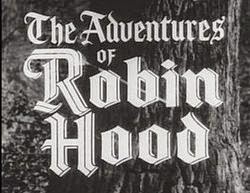
The Bible pooh-poohs false ones, he noted sacrilegiously, but there was nothing false about my boyhood idols. I never cared that much for Davy Crockett, but a few months after his popularity peaked, I was gigantic on Robin Hood, as depicted on television by the British actor Richard Greene. The opening theme (He called the greatest archers to a tavern on the green/ They vowed to help the people of the king/ They handled all the trouble on the English country scene/ And still found plenty of time to sing) was of course the corniest in the history of popular entertainment. The guy who went on to become The Beatles’ music publisher sang the closing theme, but that meant nothing to one who wouldn't hear The Beatles for nine more years. 

By 1957, I’d transferred my allegiance to the pop/folk singer Jimmie Rodgers, who sounded like a cross between Burl Ives and Buddy Holly, and had actual Elvis’s Jordanaires velvetly exclaiming, “Doo-wah!” on my favorite of his hits, “Kisses Sweeter Than Wine,” containing what I thought at the time must be the most heartbreaking line in the history of Western music in Now that I’m old and I’m ready to go. (Admissions of mortality always fog me up.) I’d walk over to the grocery store near where I lived with my parents in Playa del Rey and stare for hours at the photograph there depicted, wondering if I’d ever achieve a cigarette, big guitar, and greasy kiss curl like my idol’s.

By 1960, I’d abandoned Jimmie for Los Angeles Dodgers first baseman Norm Larker, though all I knew about him was that he was a good clutch hitter. I died a little bit when, on the last day of the season, he lost the National League batting title to Pirates shortstop Dick Groat, finishing .002 behind. I have since learned that he was from Alabama, of all places. I would like to think he wasn’t a redneck, but there are no photographs of him kissing John Roseboro, as there are of Sandy Koufax.

Pop music was largely dreadful in those days, unless you knew where to find the good stuff, and I had no inkling, so my 1962-1963 idol was another athlete, basketballer Hot Rod Hundley. In college, he’d been the Pistol Pete Maravich of his (earlier) era, the most exciting white guy in sight, but wound up as the Lakers’ team clown. At the end of a game in which they were very far ahead or very far behind, they’d put him in to perform dribbling and other stunts — presumably, when the Lakers were ahead, to the other teams’ intense annoyance. He lived one street south of my family’s place just outside Pacific Palisades. I walked past it an awful lot hoping that he might invite me in for a beer or some sunflower seeds, but never actually glimpsed him.

I came to adore The Beatles, after almost a year’s staunch (and misinformed) resistance, but never idolized them as I later idolized Pete Townshend, for being ridiculous and brilliant and hilarious and scary and funny-looking in a perfectly wonderful way, and for not being much of a guitarist, but playing his guitar as no one else on earth had ever thought to. I idolized Wes Wilson, the (West Coast) Fillmore Auditorium’s Beardsley-influenced poster artist, and Tom Wolfe, and maybe Philip Roth for a while there, and Johnny Rotten, until his schtick got really stale. I idolized Mick LaSalle, the best movie critic in America, and Meryl Streep, the best actor ever.


In 2014, the closest I have to an idol is my friend and mentee Arturo Lima, whose implacable good cheer humbles and inspires me. I hope you get a chance to meet him one day.

Wednesday, June 2, 2010

Jeerers at Mullets

I very nearly got a mullet earlier this year. It would have given a certain kind of person such pleasure to be able to nudge his or her companion and marvel, “Lookee there, dude’s got a mullet! It would have given me even greater pleasure to inspire that behavior in that sort of person — the kind who, in reveling in his or her own hipness, exposes his hopeless lack thereof.

As I have probably written here, I met the uncrowned king of these people in 1997 while passing out flyers for my theatre company at an Absolut-sponsored event in San Francisco’s Golden Gate Park. Thinking it would make people more likely to accept my flyers, I took at one point to hollering, “Absolut vodka shown to cause drunkenness in laboratory animals!” Quoth the uncrowned king in sneeringly declining a flyer, “Well, duh!”

Such people love to make fun of others’ bygone fashion choices on the basis of old photographs. They’ll see, for instance, a photograph of a young woman with big hair and shoulder pads of the sort popular in the mid-80s and snicker, “What the hell were you thinking?”

A very cheap shot, that, and stupid. The most exciting thing that fashion — and rock fashion in particular — does is emphatically refute that which proceeded it, and nothing’s more emphatic, and thus exhilarating, than extreme. Thus, it stands to reason that any early or especially zealous adapter of a new style is going to look ridiculous to those clinging in terror to the refuted one. All the hundreds of little Ziggy Stardust clones one saw in the big coastal cities in the early 70s looked preposterous in comparison to, say, Crosby, Stills & Nash — but infinitely cool to one another. And whose was the greater courage, the greater panache — that of the mindless unwashed in their unstyled long hair, patched jeans, and T-shirts, or the glam kids?

This idea applies transracially, of course. Show a modern hip hop kid a photograph of the Jacksons, say, circa 1973, and he’s apt to die laughing at their huge globular hair, as he certainly would at the frilly eyelinered dandies who proliferated in the wake of Prince. Or leave music entirely and think about basketball, in which the now-standard baggy shorts favored by Michael Jordan looked comical in comparison to previous generations'.

“What the hell were you thinking?” would make sense only if there were such a thing as an absolute in fashion, and I’m not sure there is. I doubt anyone could persuasively argue that women’s hair didn’t go through a dreadful stretch in the early ‘50s when short-and-wavy was very voguish, or that the (extremely!) brief maxidress craze of around 1970 wasn’t a crime against humanity, or that nearly everyone doesn’t look better in flared trousers (as they make the legs appear longer, the hips slimmer, and the feet smaller). I am well aware, though, that various New Wave trendsetters circa 1980 vilified such trousers as monstrous because they'd become icons of earlier musical movements.

The most fashionable person, of course, is the one who wear what he or she feels most gorgeous in with confidence in spite of what Vogue or GQ or Esquire or jeerers at mullets say. In this regard, we need to tip our caps to the author Tom Wolfe, who’s been wearing the same self-designed attire for around 50 years now, and always looking fab in entirely his own way.

This is not, of course, to imply that I forgive his mindless condemnation of alternative sexuality.

[Many of my books are now available for download from Amazon. They include The Total Babe & Other Wine Country Yarns, Lentils on the Moon (aka A Message From Jesus in Braille, aka A History of the Jews in the Hudson Valley, Self-Loathing: An Owner's Manual, Third World USA, The Mona Lisa's Brother, and, for baseball nuts, Foul Balls and Alpha Males. You need neither a Kindle nor an iPad to enjoy 'em; simply download (free) Kindle software for either Mac or Windows, and enjoy them on your laptop or other computer!]

Friday, February 19, 2010

I'm Johnny. Fly Me.

I wasn’t always terrified of flying. In my teens and early 20s, I found it hardly more daunting than riding a bus. Then, for no good reason, in the middle of a flight from LA to San Francisco, it occurred to me that if something went terribly wrong with the plane, I probably wouldn’t live to talk about it.

We fearful fliers discover one another with an odd combination of delight and disdain. On the one hand, how lovely to meet someone who shares your recognition of how deeply terrifying the whole experience is. On the other, such a person is absolutely the last I want anywhere near me on the plane, where my hope is to be surrounded by those who, even in the most violent turbulence, only glance up briefly from their books and chuckle softly, as though at the antics of an attention-demanding toddler. I count on the flight attendants not seeming even to notice the sudden bumps that make my own blood run cold.

Even on the longest flight — and I’ve flown from London to Bangkok — I can never really relax. Every time I begin to doze off, it occurs to me that the captain might be suicidally depressed, or that a maintenance worker at the last stop with a secret substance abuse problem might have neglected to perform a crucial test. If the airline has a remarkable safety record, I think about how it’s probably due for a mishap. Beginning our gentle descent into Tenerife in the Canary Islands, I could think only of how it was the site of one of the worst air disasters in recent history.

Mind you, it isn’t the idea of dying that troubles me most, but that of the unspeakable sphincter-loosening dread the passengers on an about-to-crash plane must experience. I have nothing to fear but fear itself, and I fear the hell out of it.

I once flew down to LA from San Francisco with the famously skittish David Bowie, who shortly thereafter declared that all his future travel would be on land or water. Every time the slightest thing happened, we looked at each other with no blood in our faces. Future LA Times dance critic Lewis Segal, sitting between us, thought it hilarious. I might have tried to strangle him if I hadn’t been immobilized by terror.

Leaving from Bilbao late that same decade, I and a young woman publicist with whom I’d become chummy over the course of the San Sebastian International Film Festival worked ourselves into a state of grievous foreboding — and had a succession of stiff drinks — as we awaited the announcement of our departure gate. While she had the sense to go on the wagon once on the plane, I, by the time we landed, was drunker than ever in my life. As everybody unbuckled, grabbed his stuff out of the overhead containers, and crowded into the aisles, my bladder suddenly began shouting, “I don’t know what you think you’ve been doing, but I’m getting rid of this stuff now!” I frantically clawed my way back to the nearest lavatory through my extremely displeased fellow passengers, arriving at the last possible millisecond. When I went through customs, the poor devil whose bad luck it was to interrogate me fanned the air between our faces in disgust. Not even all Brits like the smell of a distillery.

I don’t think I’ve been on a plane in the last 60 years on which I didn’t, just before takeoff, think about Tom Wolfe’s famous piece about Phil Spector, in which Spector is seen deciding there's “something wiggy” about a plane he's on, and (successfully!) demands, moments before it's cleared for departure, to be let off. When have I been on a plane that didn’t seem very wiggy indeed as it headed for the runway? I’m proud of never having actually asked to be let out — and, before that, of never even having allowed my fear to keep me from boarding.

I’m not a member of the Sky High Club, or whatever it’s called. The thought of having at it in an airplane lavatory makes not an extra milliliter of blood rush to my pelvic area, though that may be because I’ve just never met the right girl. The only time a stewardess ever gave me a come-hither look was on a flight from LA to Edmonton, Alberta, Canada, and the fact that I could see the jagged peaks of the Rocky Mountains far too clearly beneath us made me want only more vodka. Also, I think she may have mistaken me for Cat Stevens. We’ll never know now.

Have I mentioned that I have a new album out now? Have I mentioned that Facebookers can subscribe to these little essays here?